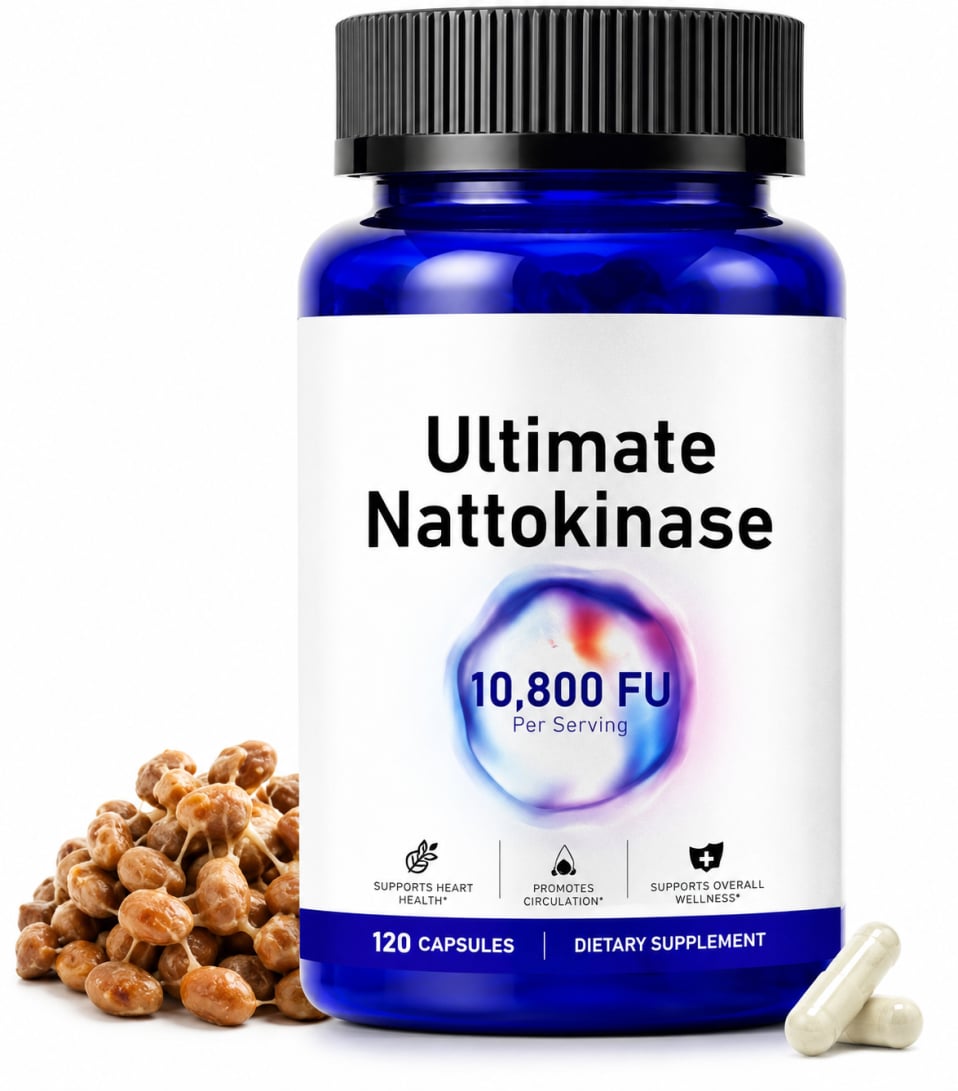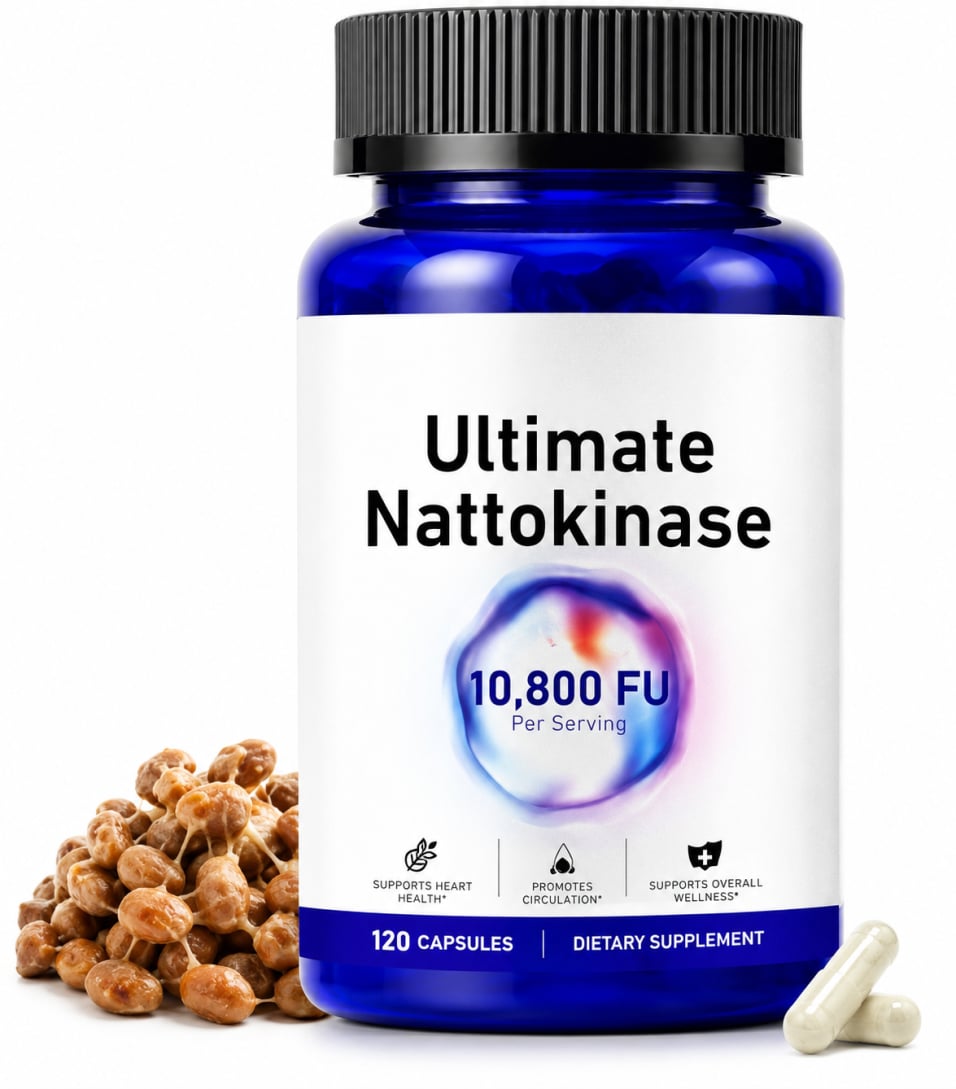
Flash Sale ONLY For Today - Special Offer
Free Shipping Today!
Our Nattokinase Arterial Support brings together nattokinase, motherwort, and oregano — three herbs with deep roots in traditional medicine and a shared purpose: supporting your heart. Together, they contain heart-soothing, blood-pressure- and cholesterol-reducing properties, along with heart-invigorating and blood-vessel-enlarging properties.
✧ Dissolves blood clots
✧ Lowers blood pressure
✧ 30-Days Money Back Guarantee

based on 378,469 reviews!
"I love this. I started using this for an international flight. I read the research and decided to continue taking it. The full dose seemed to much for me so I take half at night. I like the way I feel and sleep well. I am 83 and very active. I take no medication, have some heart issues. I am not an obedient patient and don’t want to live forever just be my healthiest while I am living."
"After reading an article about the benefits of taking Nattokinase. The pill is easy to take. Now, waiting to see how effective the nattokinase supplement will be. I’ve ordered 6 bottles. Right now, I’ve noticed a difference in my vascular health, with increased circulation and energy."
"I started taking this nattokinase supplement a few months ago for my cardiovascular health, and the results have been absolutely fantastic! My doctor even noticed improvements in my recent blood pressure readings. These capsules are very easy to swallow, leave no weird aftertaste, and don't upset my stomach. I highly recommend this product to anyone looking for natural circulatory support."
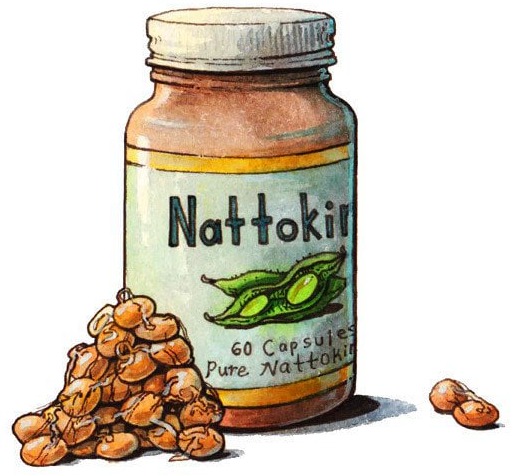
Natto is a traditional Japanese food made from soybeans fermented with a bacteria called Bacillus subtilis var. natto (formally known as Bacillus natto). This fermentation produces the enzyme nattokinase, which is responsible for natto’s fibrinolytic activity.
Despite its name, the nattokinase mechanism of action is not as a kinase enzyme.
Kinase enzymes work by adding phosphates to certain proteins, which helps dissolve blood clots. An example is urokinase, which is naturally produced by the kidneys and synthetically created for use in medicine.
How nattokinase works is as a serine protease. That means it breaks up certain proteins found in blood clots into smaller fragments. It has not been tested on actual blood clots in humans. Only the effects on risk factors have been clinically studied.
Nattokinase is also categorized as fibrinolytic protease, which is an enzyme whose basic function is to hydrolyze or break down proteins. Because proteins have a fairly complex structure, they require enzymes to break them down into absorbable and digestible individual amino acid units. Nattokinase has the distinct ability to break down the adhesive protein substance that makes arterial plaque very sticky. In this way, it supports a preventative and reversing effect on blood clotting and plaque build up in the arteries.
Every day, people eat foods that can lead to an increase in body inflammation and unhealthy levels of cholesterol. This sets up a paradigm which puts humans are at high risk for blood clot, heart disease, and stroke. Nattokinase is one type of enzyme that can break down these clots by directly cleaving the bonds of the fibrin protein components and also by hastening the production of the body’s fibrin buster (plasmin) without many of the negative side effects of pharmaceutical drugs.
Nattokinase can also break down toxins in the body, cellular debris in the blood, and undigested proteins in the gut. With the distinct ability to break down peptide bonds and liberate amino acids, proteolytic enzymes like nattokinase are now being studied for their clinical and therapeutic use in the realms of general oncology and overall immune system. Nattokinase is also resistant to the stomach’s highly acidic environment, allowing it to pass to the intestines intact.
The fibrinolytic enzyme with 600+ peer-reviewed studies. Dissolves fibrin without thinning your blood like Eliquis or warfarin.
The metformin alternative used clinically across Asia. Supports healthy blood sugar, LDL cholesterol, and triglycerides through AMPK activation.
Activates Matrix GLA Protein. Pulls calcium out of your artery walls and shuttles it back into your bones, where calcium belongs.
Kyolic-grade aged garlic supports healthy blood pressure and arterial flexibility. Backed by 30+ human clinical trials.
The most absorbable form. Felt benefits within days, lower BP, calmer nervous system, deeper sleep.
There's some early evidence that nattokinase may have benefits for heart and artery health. For example, it can help prevent arteries from becoming narrower over time. It may also help lower blood pressure and cholesterol. Finally, people who eat a lot of natto may be less likely to die of heart disease.
One study shows that a nattokinase supplement lowers the risk of blood clots after long plane flights. It may also help prevent deep vein thrombosis — a type of blood clot that usually forms in the leg. This is because nattokinase breaks down fibrin, the part of blood involved in clotting.
Other early studies show that nattokinase may help lower blood pressure. However, we need more research to confirm that it's effective.
Some studies suggest that nattokinase can break down amyloid plaques, which are abnormal clumps of protein in the brain. These plaques play a role in Alzheimer’s disease. Furthermore, heart and brain health are closely linked. By boosting heart health, nattokinase may also protect the brain.
There’s no set dosage for nattokinase. Quality and active ingredients in supplements may vary widely from maker to maker. This makes it very hard to set a standard dose. Ask your doctor for advice.
Nattokinase is a subtilisin‑family serine protease (~27.7 kDa) produced from natto or recombinantly and commonly dosed in supplements at ~2,000 FU/day.
Primary action is fibrinolysis — direct fibrin proteolysis and modulation of plasminogen/PAI‑1 balance — with supporting preclinical and small clinical studies.
Enteric‑coated, activity‑standardized products (FU on label) are preferred to maximize intact enzyme delivery to the small intestine.
Major safety concern is bleeding risk, especially when combined with anticoagulants, antiplatelets, NSAIDs, SSRIs, or thrombolytics — avoid unsupervised co‑administration.
High‑quality evidence for major clinical outcomes (e.g., reduced thrombosis events) is lacking; large, well‑powered randomized trials are needed.
Nattokinase is backed by a 30-day, 100% money-back guarantee from the date of your original purchase.
If you are not completely satisfied with your Nattokinase or your experience within the first 30 days, simply contact our support team. Upon returning the product, we will issue a full refund.
That's right, simply return the Nattokinase anytime within 30 days of your purchase and you’ll receive a full refund, no questions asked!
Nattokinase, a potent enzyme derived from the traditional Japanese fermented soybean dish natto, offers a range of promising health benefits primarily centered around cardiovascular wellness. Its most notable and well-researched effect is its powerful ability to break down fibrin, which helps dissolve blood clots, improve overall blood flow, and support healthy circulation. By maintaining a healthy vascular structure and reducing blood viscosity, nattokinase may help lower the risk of heart disease and related cardiovascular events. Furthermore, human trials have demonstrated its potential to modestly lower high blood pressure and improve lipid profiles by reducing "bad" cholesterol and triglycerides. Beyond heart health, nattokinase has also been shown to thin mucus to improve sinus airflow, while its probiotic properties can promote a healthy gut microbiome and potentially boost metabolism.
Conclusion - Nattokinase
The advancements in immobilized Nattokinase formulations for CVD treatment and the utilization of sophisticated computational methodologies to address current challenges and future prospects in this domain are discussed. Furthermore, studies conducted on humans show that larger doses of Nattokinase produce better results in treating atherosclerosis and high lipid levels. This review focus on the beneficial effects of Nattokinase, highlighting the shortcomings in its application, and advocates for more extensive studies to fully leverage its treatment potential and to set forth evidence-informed protocols for its use in cardiovascular health.
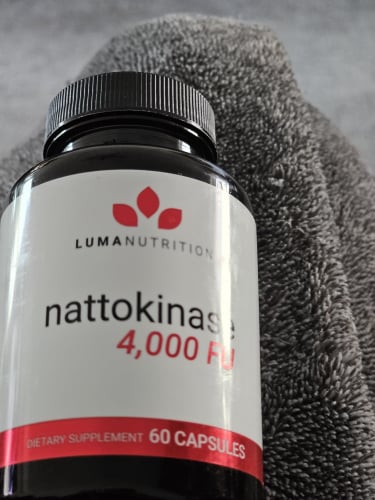
Most clinical trials use doses between 2,000 and 4,000 fibrinolytic units (FU) daily, which corresponds to roughly 100–200mg of nattokinase. Studies using this range have shown meaningful improvements in blood pressure and fibrinolytic activity with good tolerability. Starting at the lower end and adjusting based on your response is a reasonable approach.
Digestive processes can break down proteins and enzymes before they’re absorbed. Taking nattokinase away from food gives the enzyme a better chance of passing through your digestive tract intact and entering circulation in its active form, which is where it does its work.
Nattokinase is best taken on an empty stomach, either first thing in the morning or at least 30 minutes before a meal. This reduces interference from digestive enzymes and maximizes how much active enzyme reaches your bloodstream.
Research on nattokinase pharmacokinetics suggests fibrinolytic activity peaks in the bloodstream within a few hours of taking it and measurable effects on clotting markers can persist for 8 to 12 hours. This is why some protocols recommend splitting the dose into morning and evening if taking 4,000 FU daily.
Multiple randomized controlled trials in adults with mild to moderate hypertension have shown modest but statistically significant reductions in both systolic and diastolic blood pressure over 6 to 8 weeks of daily supplementation. It is not a replacement for blood pressure medication, but it may be a useful addition to a prevention-focused cardiovascular strategy.